
“Frond” refers to a large divided leaf, especially ferns. Pictured above is a frond of a large Sword Fern found in the grand forest.

“Frond” refers to a large divided leaf, especially ferns. Pictured above is a frond of a large Sword Fern found in the grand forest.

Arthropods are invertebrates that have an exoskeleton, a segmented body, paired jointed appendages, and belong in the large phylum Euarthropoda . The phylum includes insects, spiders, and crustaceans. Above can be seen a very small spider in its web. For scale, the white smudge on the left is the beak of the small blue footed booby.
List #11

Fleshy fruits with seeds are, well, fruits with inner seeds surrounded by “flesh.” These peaches, for example, have a central pit with a seed surrounded by layers of fleshy, wet fruit. Tasty too.
List #50

Heartwood is the oldest and hardest wood of a tree. It is the central spine of the trunk, and is nonliving. The heartwood of this chopped-down tree can be seen above, consisting of the rings closer to the center of the tree.
List #58

Fermentation is a metabolic process that chemically breaks down/consumes sugar in the absence of oxygen using yeasts, bacteria or other microorganisms. Pictured above are bottles of beer, a drink containing alcohol produced from the fermentation of simple sugars from various grains and hops with yeasts.
List #46
 A Spore is usually a small single-celled reproductive unit capable of growing into an adult individual independently, similar to a seed. In this photo we see clumps of orange fern spores on the underside of a sword fern. For scale the blue footed booby is about 1.5 inches tall.
List #100
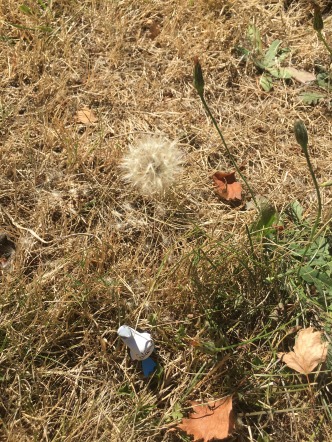
Seed dispersal is the means by which a parent plant spreads its child seeds about the environment. We can see here this dandelion plant has developed a way to disperse its seeds using the wind. The white tuft contains several seeds attached to a feather-like head, which pulls the seed up and away if the wind blows hard enough.
List #99
 Patrick Ledoux's AP Biology Blog